
Ways out4 uplinksWi-Fi where a network is set, then LTE-M, NB-IoT and satellite NB-NTN, cheapest first.
Over satellite128 bytesOne datagram carries a status and two alerts. Sent and acknowledged on a geostationary service.
Over LTE-MAbout 1 kBPer cycle of up to eight records, measured on the hardware.
Updated over BluetoothUnder 6 minutesBoth processors in 337 s, every setting kept. Over LTE-M, 409 kB in 129 s.
Datasheet (PDF)
Three pages: what it does, how it works, how it is tested, and the specifications.
The first run, step by step
From an unflashed board to readings on your own platform, and a command sent back.
Who does what
Our partner Fanstel · the hardwareDesigns, makes and sells the BLG20x, and publishes its design: Bluetooth 6 with an NPU for edge AI, cellular and satellite, and Wi-Fi 6 on the BC02C model, in a compact IP51 enclosure for desk or wall, on USB-C power. FCC, ISED and CE are pending at Fanstel.
Adsum Networks · the firmwareIndustrial-grade IoT firmware, to use as it is or to customise in hours with Adsum IoT Coder. We then put it through our reliability and security tests, support it, and keep it safe with security updates.
You · the productYour devices, your network, your data platform. Nothing of ours in the path.
What it is
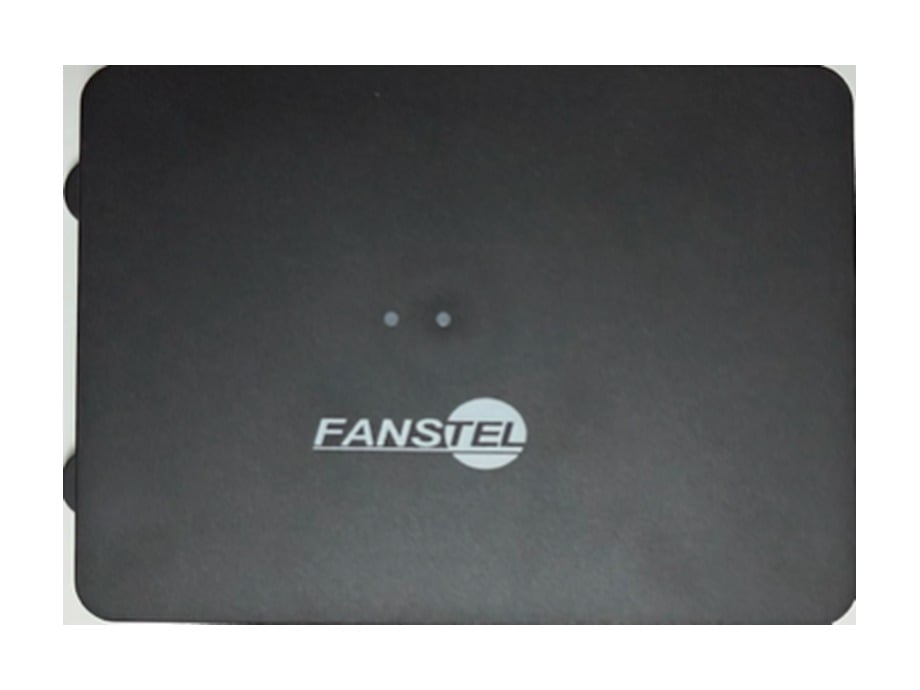
The BLG20x as it ships.
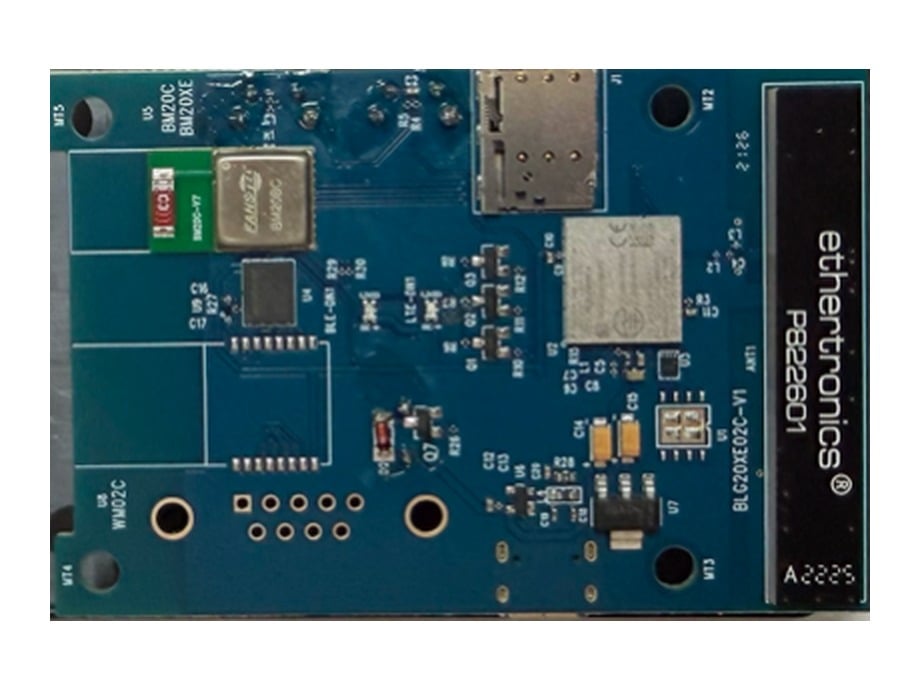
The board inside: the radio modules and the SIM holder.
- The Bluetooth half, a Fanstel BM20 module on Nordic’s nRF54LM20B, hears the sensors, decides what is worth keeping, sends over Wi-Fi where the WM02C module is fitted and a network is set, and is what you commission over Bluetooth, from Adsum IoT Coder or the commissioning page.
- The wide-area half, a Nordic nRF9151, owns the modem: LTE-M, NB-IoT and NB-NTN satellite. It schedules the sends and keeps the unit inside its data budget.
What the firmware does
Your sensorsAnything that advertises over Bluetooth LE.
The gatewayAdmits the devices you name. Counts or quarantines the rest, never silently.
Wi-Fi, LTE-M, NB-IoT or satelliteCheapest first, in the order the deployment allows.
Your platformYour tenant, your devices. Nothing of ours in the path.
A reading and a command take the same path, in opposite directions.
- Commissioned from Adsum IoT Coder or from a browser. Over Bluetooth either way: the Hardware page in Adsum IoT Coder and its agent at your desk, or Chrome over Web Bluetooth on an installer’s phone. Both write the unit’s position, with how uncertain it is, its label and its credential, then read every value back from the unit rather than trusting the button.
- A deployment class, set once. Terrestrial only, satellite only, or both as a ladder. The class fixes the transport and the encoding, and the unit refuses a setting its class cannot carry, at the desk, before it is installed.
- Only the devices you name. An expected-devices list admits your sensors. Everything else heard is counted or held in a quarantine you can inspect, so a device that should be there and is not is visible.
- Readings to your own platform. Confirmable CoAP, or MQTT with or without TLS on Wi-Fi and cellular; protobuf or CBOR; each reading carrying the device’s own timestamp. Verified end to end with ThingsBoard Cloud; any platform that accepts them will do.
- A command back. A value set on the platform reaches the Bluetooth half on the unit’s next exchange.
- Metered by design. Wi-Fi first, then the cheapest cell; every send is checked against a monthly allowance, with a separate one for satellite, which is used only for what cannot wait.
Industrial grade, by design
Runs unattendedHardware watchdogs, and self-recovery from a hang, a dropped link, a bad configuration or a power cut.
Never loses dataRecords wait in flash until your platform acknowledges them. Alarms are never overwritten, and every dropped record is counted.
Updated over the airSigned updates for both processors, over Bluetooth at the desk or LTE-M and NB-IoT in the field, so a security fix needs no site visit.
Edge AI on boardData is pre-processed on the relay, beside the radio, so a decision leaves the site and not raw data.
Secure by designSigned boot, secure key storage, authenticated Bluetooth, and only the devices you name admitted. Once claimed, it takes images only with your key.
Managed from afarSet up over Bluetooth, from Adsum IoT Coder or a browser. Health and reset causes reported. Commands sent back from your platform.
Costs under controlWi-Fi first, then the cheapest cell, a data budget counted before every send, and the modem off in between.
Tested to prove itReliability and security tests on the real board, not in a simulator. The tests.
Edge AI, and why satellite needs it
Send the decision, not the data. A satellite link carries a few kilobytes a month, not a stream. So the work happens on the gateway, on the nRF54LM20B beside the radio, before anything is sent: each device’s readings are filtered with their own state, thresholds and hold times; a change, an anomaly or a missing device becomes one alert instead of a thousand readings; alerts go first, and the rest is summarised and waits for a cheaper uplink.
More on the link itself in satellite IoT: NB-NTN.
Updated over the air, signed
Updates are how a fleet stays secure and how a product keeps improving, so they are part of the firmware and not an afterthought.- Over Bluetooth, at the desk. Both processors in under six minutes, from Adsum IoT Coder or the commissioning page, and the unit keeps its settings.
- Over the mobile network, in the field. LTE-M or NB-IoT, while the relay keeps working: no site visit.
- Never over satellite. An update waits for a cellular uplink, so the satellite allowance is never spent on firmware.
- Safe by default. Signed images only, for both processors. A new image is tested on the unit, and rolls back by itself if it does not prove healthy.
- Yours once claimed. A relay claimed with your computer’s key takes images from no one else.
From our firmware to your product
Minutes
Try itThe demo comes on every relay from Fanstel: ten devices, no time limit. Judge it on your own desk.
Under 30 min
First gateway liveCommissioned from Adsum IoT Coder or a browser, and sending readings to your own platform.
Hours
Make it yoursA new sensor, a rule or a payload, with Adsum IoT Coder, which already knows the board and the firmware.
Then
Certify your versionYour build goes through the same reliability and security tests, on the board, and earns its own certificate.
Five years
Stay secureWatched, advised and fixed: security fixes for five years, delivered over the air.
BLG20x or LBG20x?
The same firmware, the same uplinks and the same licences. What differs is where the relay goes.
Both take Wi-Fi on their BC02C models. Fanstel’s pages have the models on sale.
Ways to have it
Buy licences at www.adsumnetworks.com. For a quote, the source or your own build, write to us. We reply within one business day.
What you need
What the demo firmware does not do
- No device management. A demo unit does not appear in a device console and is not updated over the air. Over-the-air updates are part of the production firmware, fitted per build.
- No GNSS. The board has no satellite positioning receiver, so the unit’s position is stated at commissioning, and commissioning will not finish without one.
- Limited use. The demo is for evaluation. The limits are stated in the extension before you install, and the commissioner reads them off the unit.
Where to buy
Fanstel designs, makes and sells the BLG20 family, including models with a power amplifier, Wi-Fi 6 or a CAN port; FCC, ISED and CE are pending at Fanstel: fanstel.com. Adsum writes, verifies and licenses the firmware and the knowledge.Firmware specification
What each processor does, the uplink order, record sizes, updates, recovery and the tests. With the datasheet.
The first run, step by step
Install, flash, commission, admit a sensor, send readings, send a command back.
Satellite IoT: NB-NTN
What NB-NTN is, what it costs, and how the BLG20x uses it.
The NTN-GW Commissioner
The page that commissions a BLG20x from Chrome, over Web Bluetooth.
Gateway firmware, row by row
Every gateway, and every way to have its firmware.